
Latest Real Estate News
- Home
- Latest Real Estate News


JVM Spaces is a trusted real estate developer committed to creating thoughtfully designed residential and commercial spaces.

Sep 30 2026, 09:30 AM
Work on Mumbai’s 13.9-km Elevated Eastern Freeway Extension has moved ahead, with the first 90-tonne-plus precast segment installed above the Eastern Express Highway.
A 90-tonne concrete segment has now been placed above Mumbai’s Eastern Express Highway, giving a clear sign that the city’s next major elevated road is finally taking shape.
The Mumbai Metropolitan Region Development Authority (MMRDA) has started erecting the precast sections of the 13.9-km Elevated Eastern Freeway Extension. The first segment was lifted near Bhandup Pumping Station using a 115-metre-long launching gantry, while traffic continued to move on the highway below.
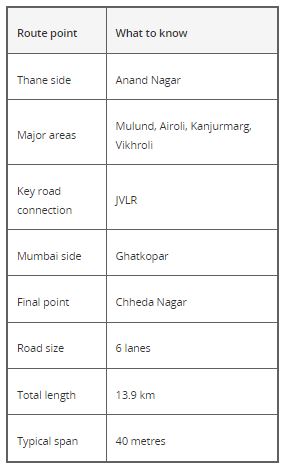
The six-lane road will connect Anand Nagar in Thane with Chheda Nagar in Ghatkopar, passing through several important eastern suburbs. For commuters, the bigger change is still some time away, but the project has now entered a stage where the elevated road itself is being assembled.
The new corridor will start at Anand Nagar near Thane and end at Chheda Nagar, where it will connect with the existing Eastern Freeway. The route passes through a long stretch of Mumbai’s eastern side, including Mulund, Airoli, JVLR, Vikhroli, Kanjurmarg, Mankhurd and Ghatkopar. MMRDA also plans ramps at key locations, including Mulund Check Naka, Airoli Junction and Vikhroli Junction.
One important part of the plan is its connection with the Anand Nagar-Saket Elevated Road near Mulund Octroi Naka. This will help link the new corridor with another major elevated road network in the Thane region.
The latest construction milestone is different from the foundation work that has been happening for months.
MMRDA has now started placing the large precast segments that will form the actual elevated structure. The first one was installed at Pier P78 near Bhandup Pumping Station.
A special launching gantry is being used for this work. Instead of bringing large cranes and equipment onto the highway at every location, the gantry moves along the elevated structure and lifts the heavy sections into position.
This is particularly important on the Eastern Express Highway because traffic cannot simply stop for months while the elevated road is built above it.
The first launching gantry, called LG-01, will progressively place 1,632 segments towards Mumbai. Another gantry will work from Vikhroli, while a separate ground support system will handle construction towards Kanjurmarg and Thane.
The scale of the structure is easier to understand when you look at the numbers.
A typical span of the elevated road will be around 40 metres long and will use 16 precast segments. The entire project will have 288 full spans.
Here is how the construction is planned:
So, the first segment is only the beginning. Thousands of such pieces will have to be cast, transported and placed before the full 13.9-km road takes shape.
While the superstructure work has just started, work below the road has already moved ahead.
MMRDA's latest figures show 81% of monopile work has been completed. Group-pile work is at 19%, while pier construction has reached 51%. Pier-cap work stands at 33%.
The official MMRDA project page currently puts the overall physical progress at 17.63% and financial progress at 17.09%.
That means the first segment being placed is a major visual milestone, but the project is still far from complete.
The corridor is being built along one of the busiest stretches between Mumbai and Thane. Once operational, it is expected to give vehicles another elevated route and reduce pressure on the Eastern Express Highway.
The planned journey time between South Mumbai and Thane is expected to come down to around 20 to 25 minutes, though actual travel time will depend on traffic and how vehicles enter and leave the new corridor.
For people living along the eastern Mumbai-Thane belt, the important part is not just the road's length. It is the number of existing roads and neighbourhoods it will connect along the way.
The new freeway is also something homebuyers looking at property in Mulund and nearby areas can keep an eye on.
Mulund is close to the Thane-Mumbai connection and will sit along the proposed corridor. The route will also pass through Vikhroli, Kanjurmarg and Ghatkopar, where residential development is already strong.
Better road access can make daily travel easier for people who work in Mumbai but live on the Thane side. Areas closer to the new road and its entry points could also become more convenient for residents.
This is also something buyers looking at flats in Thane may want to track, especially as the new road connects the city with the eastern suburbs of Mumbai.
But it is too early to say that the elevated road will directly push up property prices. The actual impact will depend on the final access points, traffic movement and how the corridor connects with the rest of Mumbai.
For buyers, the better thing to watch is which neighbourhoods get direct access to the corridor. Not every area along the 13.9-km stretch will see the same impact.
The project has a 48-month work completion period, according to MMRDA. Its accepted contract amount is ₹2,682 crore.
With the first precast segment now in place, the construction team will continue moving along the corridor, adding more segments and completing the remaining piers and supporting structures.
For Mumbai and Thane commuters, the latest milestone is therefore less about the road opening immediately and more about seeing the actual elevated structure begin to rise above the existing highway.
The first 90-tonne segment is now in place. The next phase will be about repeating that process across the 13.9-km route until the Eastern Freeway Extension finally connects Chheda Nagar and Anand Nagar.
Source: www.magicbricks.com
Back to All: News Updates